Folktale: The Clay Boy Who Became a Man

Have you ever wished you could shape something out of nothing—give life where there was only longing? In Slavic folklore, there’s a tale of a lonely woman who, desperate for a child, sculpts a boy from the clay of the riverbank. She whispers a spell, and miraculously, the clay boy comes to life.

But here’s the twist: the clay boy is strong, but he’s also hollow. He eats and eats, never satisfied, and grows into a giant. Eventually, he threatens to consume his own creator. The villagers must use their wits (and a bit of water) to dissolve him back to the earth.

What does this story say about the soul? It’s not enough to have form; we need spirit, compassion, restraint. The clay boy is animated, but he’s not truly alive. It’s a cautionary tale for all creators: what we shape with our hands must also be shaped by our hearts.

Have you ever created something—a project, a relationship, a dream—that looked perfect on the outside but felt empty within? How did you bring soul to it? Maybe the next time you mold clay, you’ll remember to breathe a little love into your creation.

Ceramic Artists Speak: The Soul in Clay

When I first read Paulus Berensohn’s words—“Clay is a teacher. Clay asks us to slow down, to listen”—I felt like he was speaking directly to my soul. There’s something meditative about working with clay. It forces you to be present, to pay attention to the smallest details, to surrender control.

Have you ever tried making pottery? At first, it can be frustrating. The clay wobbles, the walls collapse, your hands get tired. But then, something magical happens: you find a rhythm. You start to listen—not just with your ears, but with your hands, your breath, your whole being.

I think that’s why so many ceramic artists talk about clay as a spiritual practice. It’s not just about making bowls or mugs; it’s about shaping your inner life. Each piece is a conversation between your soul and the earth.

What is clay teaching you? Maybe it’s patience, maybe humility, maybe the courage to start again. I invite you to pick up some clay, even if you’ve never tried before. Let it teach you something about your own soul.

Myth of Prometheus: Clay and the Gift of Fire

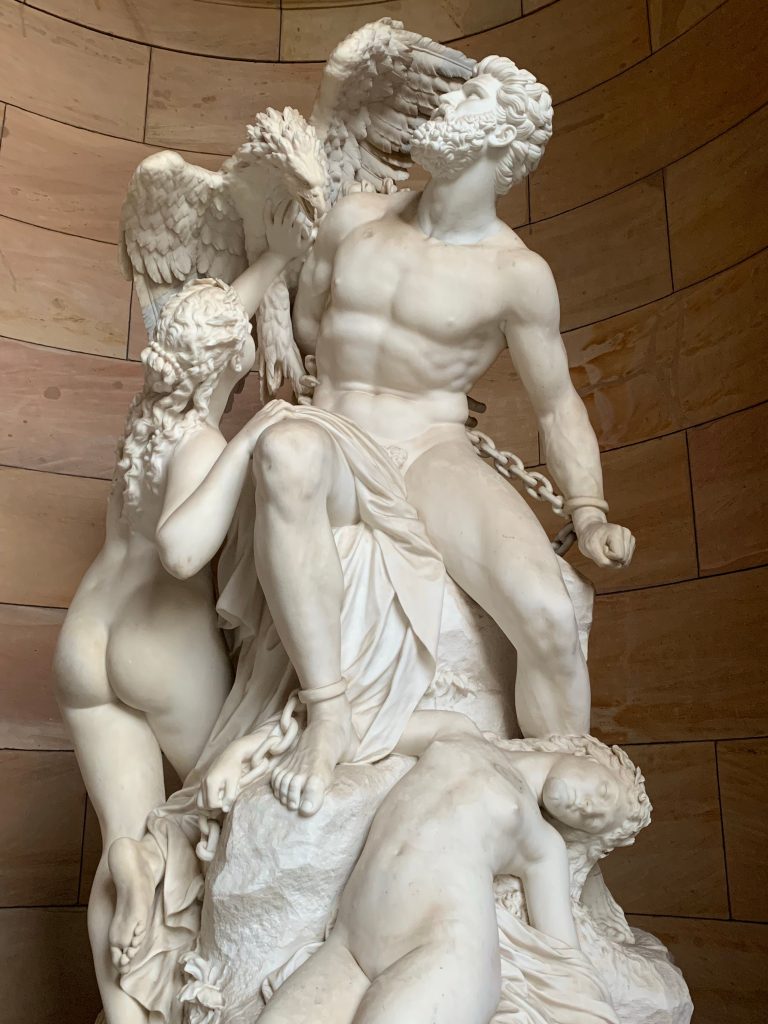
Let’s step into the world of Greek myth, where Prometheus, the clever Titan, shapes the first humans from clay. But clay alone isn’t enough—he steals fire from the gods and gives it to humanity. Suddenly, these clay figures are alive, animated by the spark of spirit.

Isn’t that a thrilling image? We’re not just earth and water—we’re fire, too. The soul is the flame that animates the clay. Every artist who works with clay knows this. It’s not just about shaping mud; it’s about bringing something to life, risking failure, daring to create.

Sometimes, I think we’re all a little like Prometheus—trying to bring light to the world, even if it means getting burned. When you create, what “fire” do you bring to your work? What risks do you take to animate your life with soul?

If you’ve ever felt a creative spark, you know what it’s like to be both clay and fire. Don’t be afraid to let your soul ignite your art—or your life.

Potter’s Parable: Jeremiah 18

There’s a moment in the Book of Jeremiah that always makes me smile. God tells Jeremiah to go down to the potter’s house. There, he sees the potter working at the wheel, shaping and reshaping a lump of clay. Sometimes the vessel collapses, so the potter starts over, patiently molding it into something new. Then God says, “Like clay in the hand of the potter, so are you in my hand, Israel” (Jeremiah 18:6).

Isn’t that comforting? We all have moments when we feel like we’ve collapsed on the wheel—when plans fall apart, when we make mistakes. But the story doesn’t end there. The potter doesn’t throw the clay away. Instead, she starts again, with patience and hope.

I like to think our souls are like that clay. We may get knocked off center, but we’re never beyond repair. The divine potter keeps working with us, shaping us into something beautiful, flaws and all.

Have you ever had to start over, either in art or in life? How did it feel to be “remade”? Next time you feel like you’re spinning on the wheel, remember: the process is sacred, and every collapse is just a chance to be reshaped.

Maasai Clay Houses: Sacred Shelter

Let’s travel for a moment to the sweeping savannas of Kenya and Tanzania, where the Maasai people build their homes—enkangs—out of earth and water, dung and stick. These aren’t just practical shelters; they’re living, breathing expressions of a spiritual relationship with the land.

I remember the first time I saw a Maasai clay house. The walls, smoothed by hand, seemed to glow in the late afternoon sun. Inside, it felt cool and safe, like being cradled by the earth itself. There’s a spiritual wisdom in building with clay. It’s a way of honoring the land, of saying, “We are part of this earth, and it is part of us.”

The Maasai have a saying: “A house built of clay stands firm in the wind.” Isn’t there a lesson here about the soul? When we build our inner lives from what is real and close to the earth—humility, gratitude, connection—we become resilient. We stand firm, even when the winds of change blow hard.

What are you using to build your own “house”—your inner life? Are your walls made of rigid pride or flexible, forgiving clay? Maybe it’s time to get your hands dirty and build something that will truly shelter your soul.

Clay in Genesis: Divine Hands and Human Souls

Have you ever stopped to think about the story of our beginnings? In the Book of Genesis, there’s this beautiful, almost tactile moment where the Creator gets His hands dirty—literally. Genesis 2:7 says, “Then the LORD God formed man from the dust of the ground and breathed into his nostrils the breath of life, and the man became a living being.” Imagine that: the divine sculptor, kneeling in the mud, shaping the first human from clay.

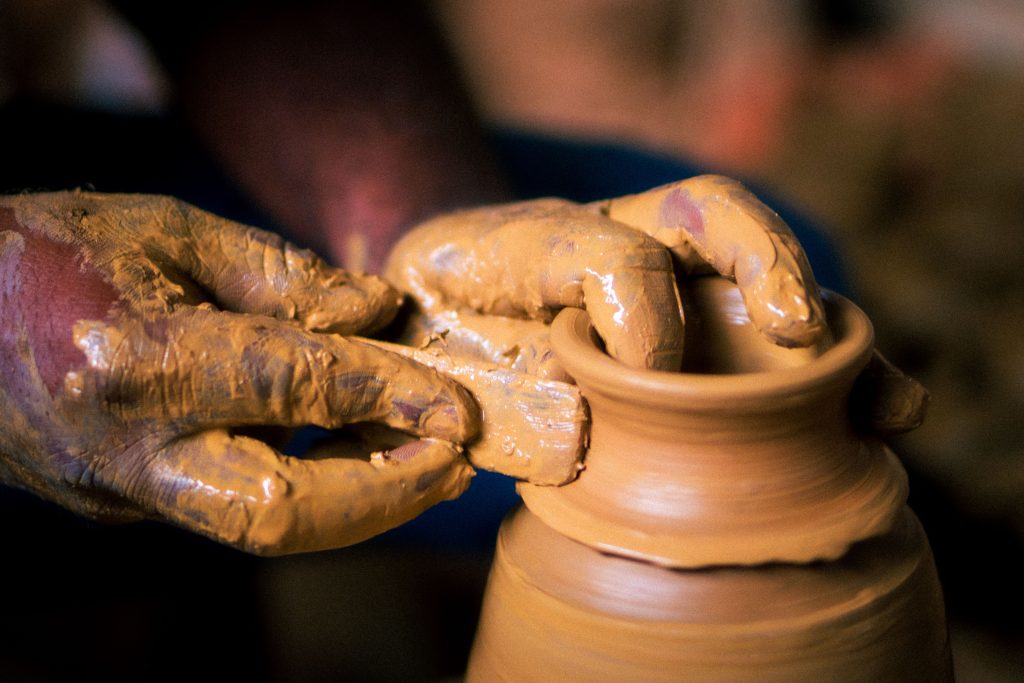
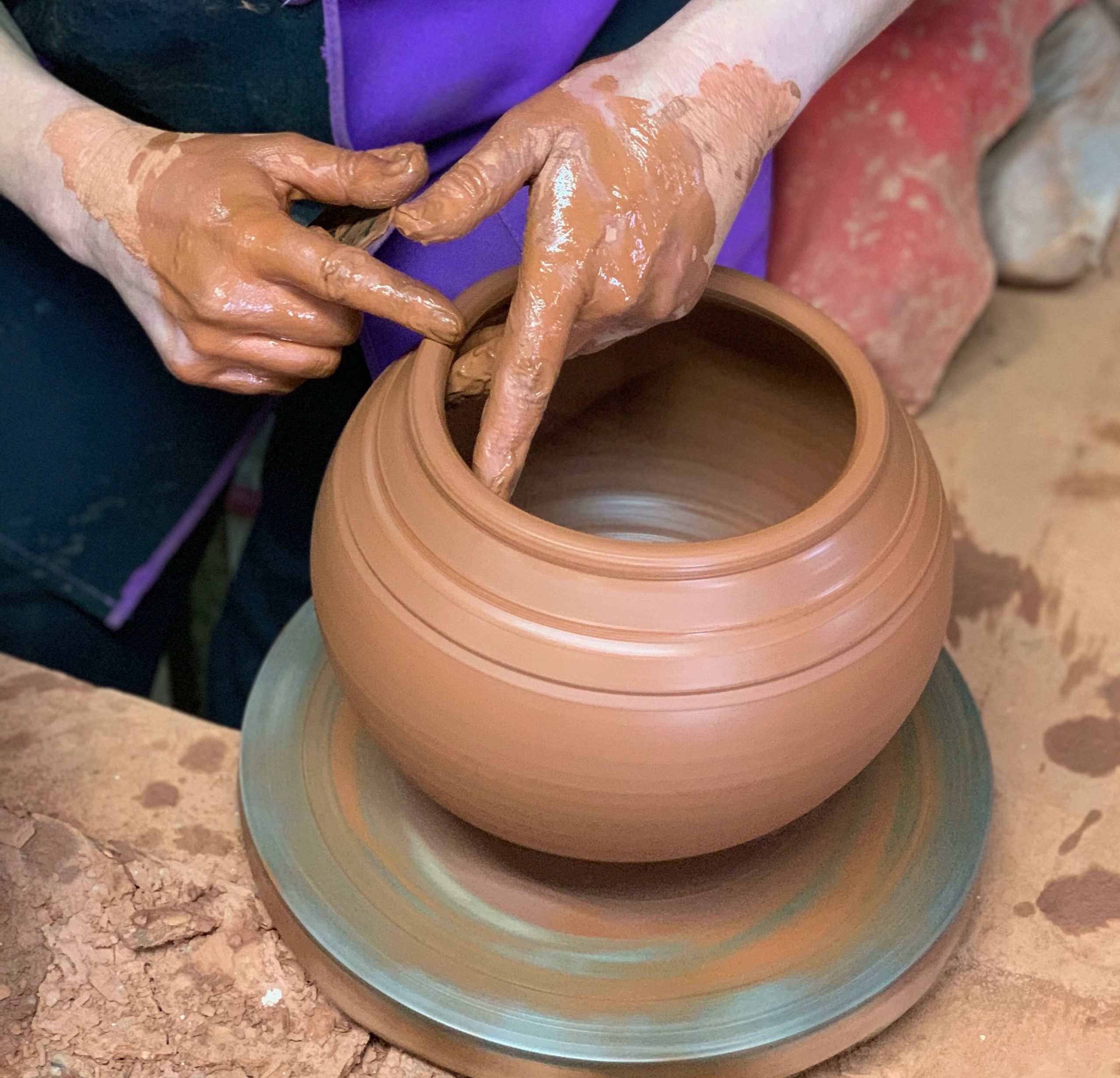
A potter shaping clay on a wheel.
Credit: Photo by Quang Nguyen Vinh, via Pexels (https://www.pexels.com/photo/person-forming-clay-on-pottery-wheel-2131613/)

There’s something so intimate about this image. It’s not a distant, abstract act of creation—it’s hands-on, personal, and even a little messy. Clay gets under your fingernails. It’s cool and yielding, but it can be stubborn too. If you’ve ever tried pottery, you know it takes patience and a willingness to start over when things collapse. Isn’t that a bit like the journey of the soul? We’re shaped, reshaped, sometimes broken down and made anew.

I often wonder: what does it mean to be “clay in the hands of the potter”? Does it mean we’re passive, or does it mean we’re full of potential? Can we, like clay, be open to transformation? When life feels like it’s spinning out of control, maybe we’re just on the wheel, being formed into something new.

Have you ever felt yourself being “remade” after a setback? What did that process teach you about your own soul? I encourage you to try working with clay—even just a lump in your hands. Notice how it reacts to your touch, how it resists and yields, how it remembers every fingerprint. Maybe you’ll find a little bit of the divine in your own creative process.

Stay Creative!

Max

Toshiko Takaezu: Abstraction

Toshiko Takaezu: Abstraction

Toshiko Takaezu in 1997 Toshiko Takaezu (1922-2011) was a technically masterful and innovative artist best known for her ceramic sculptures, which she treated as abstract paintings in the round. Her gestural style, distinctive palettes, and complex layering of glazes align with the practices of Abstract Expressionists who were her […]

We all looked up to her as an artist because her work was so expressive and unique, and also as a woman forging new terrain and creating original and powerful work.

Click here to view original web page at asianartnewspaper.com

Contemporary Ceramics From Around the World: 10 Artists, 10 Works

Contemporary Ceramics From Around the World: 10 Artists, 10 Works

One of the things that I find surprising about contemporary ceramic art is the range of technique combined with whimsy that has been used. This has been an ongoing development made possible by wide-ranging discoveries in glaze and clay body research and combined with amazing references to ancient ceramic work as well.

“Although traditionally used as a medium for functional or decorative objects, ceramic has become a medium that is increasingly used by contemporary artists. Here is the work of some important contemporary ceramic artists from around the world! Grayson Perry Grayson Perry, The Existential Void, 2012 “I like the whole iconography […]

Click here to view original web page at www.peramuseum.org

Otherwordly Ceramic Forms by Janny Baek Evoke Growth and Transformation

Otherwordly Ceramic Forms by Janny Baek Evoke Growth and Transformation

Art Craft All images © Janny Baek, shared with permission “I’ve always been drawn to art in different ways, but sculpting clay by hand seems to come most naturally to me. I think it is my most effective means of communication,” says Janny Baek , whose playful, abstract ceramics […]

It’s a lot harder than you’d think to create something new in clay, a new vision and a new form and expression. However Janny Baek has ventured beyond and made work that really captures imagination.

Click here to view original web page at www.thisiscolossal.com

Toshiko Takaezu

Toshiko Takaezu

Photographer unknown Biography Selected Publications film / videos Periodicals / newspapers Books / Catalogues Toshiko Takaezu (1922-2011) was one of the twentieth century’s greatest abstract artists. Gifted with prodigious drive and vision, she combined inspirations from her own cultural background with currents from contemporary painting and sculpture, arriving at […]

–Though she is being given some special attention during a celebration month honoring women and that is quite valid, I have always thought of her as a great artist and didn’t need to know her gender. At the Crocker Art Museum (Sacramento, CA) near where I used to live, there were three of her extraordinary pieces right by the CAFE, thus serving food of the soul as well as a mean salad inside. She had a way of using simplicity of form and surface in a way that was deeply expressive.

Click here to view original web page at www.toshikotakaezufoundation.org