How Kwangjuyo Makes Traditional Korean Ceramic Dishes for Michelin-Starred Restaurants — Handmade

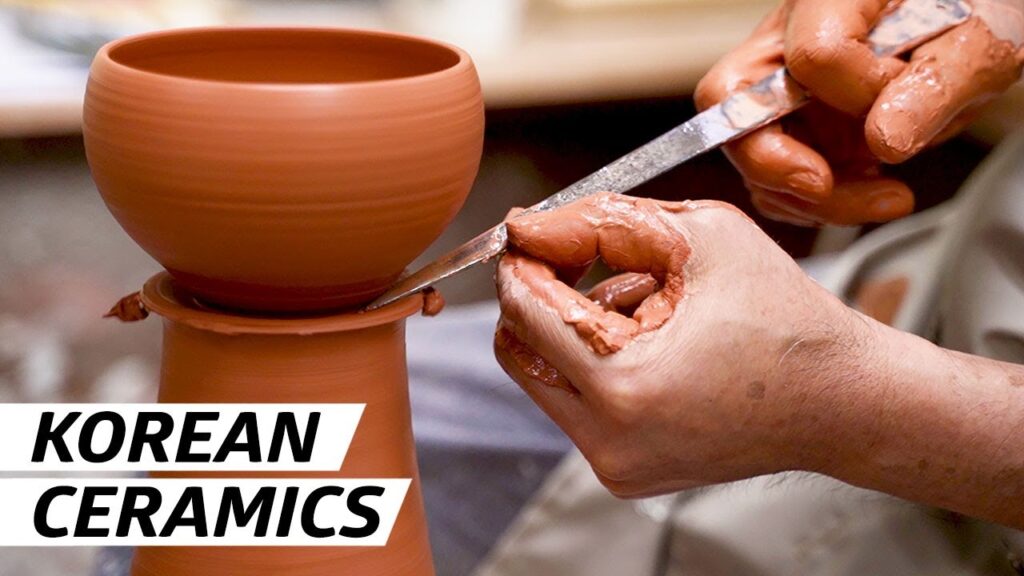
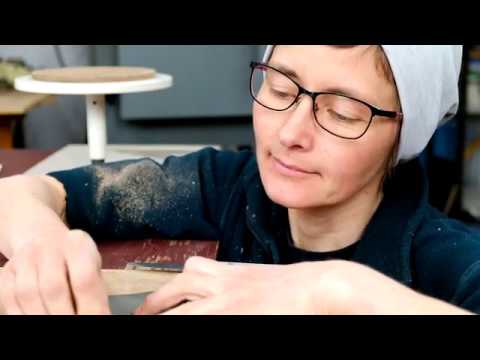
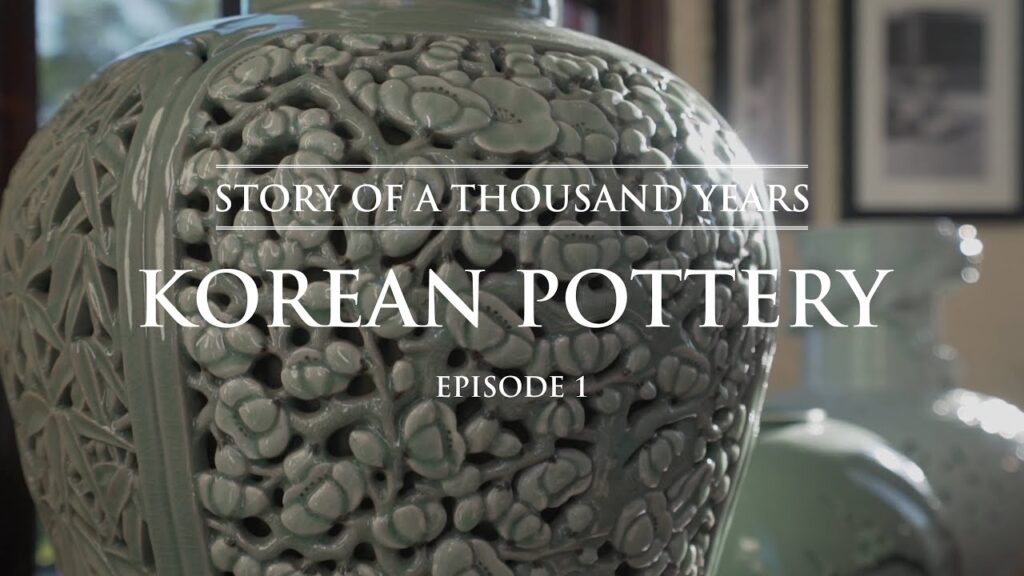
Kwangjuyo Group has been making 3,000 varieties of traditional Korean ceramic cups, bowls, and plates by hand since 1963. The company’s hands-on approach, which includes shaping the pieces from clay, hand-carving floral designs, and custom glazing, all stem from Korean tradition. The pieces have made their way to Michelin-starred restaurants like The French Laundry in California’s Napa Valley and Jungsik in New York City. You can purchase pieces from Kwangjuyo here:

Credits:
Producers: Pelin Keskin, Carla Francescutti
Director/Field Producer: Nadia Cho
Camera: Gerald Lee, Tim Han
Editor: Murilo Ferreira

Executive Producer: Stephen Pelletteri
Development Producer: McGraw Wolfman
Coordinating Producer: Stefania Orrù
Audience Engagement: Daniel Geneen, Terri Ciccone
———————————————————————————————————-
For more episodes of 'Handmade,' click here:

Eater is the go-to resource for food and restaurant obsessives with hundreds of episodes and new series, featuring exclusive access to dining around the world, rich culture, immersive experiences, and authoritative experts. Binge it, watch it, crave it. 

Subscribe to our YouTube Channel now!

Stones of Medieval Italy

To celebrate the publication of Italian Medieval Sculpture in The Metropolitan Museum of Art and The Cloisters by Lisbeth Castelnuovo-Tedesco and Jack Soultanian, international specialists will present talks on medieval sculpture.

Lectures:
Welcome and Overview
Peter Barnet, Michel David-Weill Curator in Charge, Department of Medieval Art and The Cloisters, MMA

Introduction
Charles T. Little, curator, Department of Medieval Art, MMA

Italian Medieval Sculpture: Who? What? When? Where?
Dorothy F. Glass, professor emerita of Art History, University at Buffalo

Collecting Italian Sculpture
Pierre-Yves Le Pogam, chief curator, Department of Sculpture, Musée du Louvre

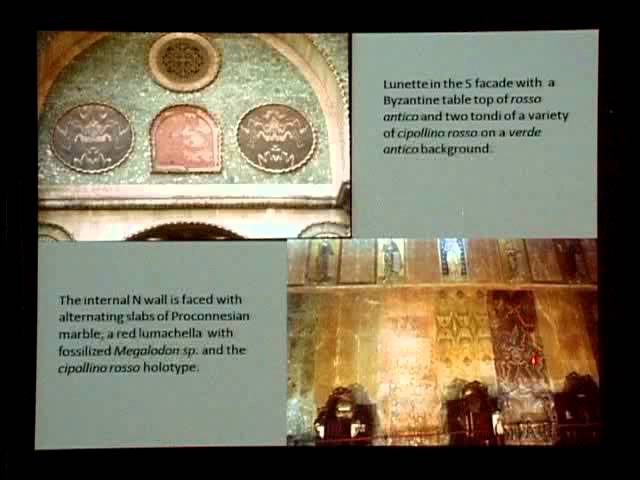
The Stones of Medieval Venice
Lorenzo Lazzarini, Professor of Applied Petrography and Director of the Laboratory of Analysis of Ancient Materials, Università IUAV di Venezia

Rethinking the Medieval Portrait Bust in Italy
Rebecca Müller, assistant professor, Kunstgeschichtliches Institut, Goethe-Universität Frankfurt am Main

Discussion Session
Moderated by Valentino Pace, Professor of Medieval Art, Università di Udine, and Richard Krautheimer Professor, Bibliotheca Hertziana, Max Planck Institute for Art History, Rome

This program is made possible by the Audrey Love charitable Foundation.

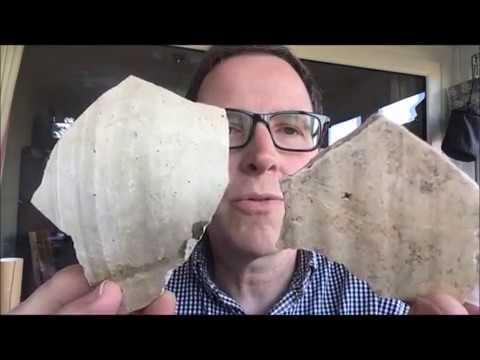
Is my shard Medieval or Post Medieval? Help!

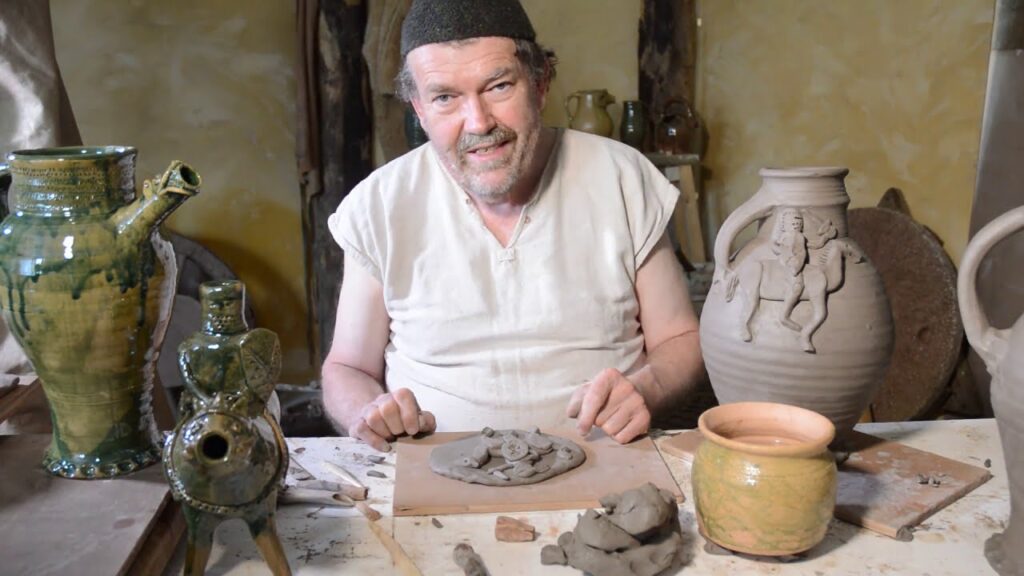
Some help with dividing green glazed whiteware sherds into Medieval and Post Medieval.
To see hundreds of other pottery finds, and share your own for ID, join these Facebook groups –
Thames Foreshore Finds –
The River Thames Mudlarking Finds –

and if you like the metal stuff there's loads of that too!
Also check out a pottery only Facebook site for UK finds –

XIIIth Congress AIECM3 on Medieval and Modern Period Mediterranean Ceramics – Opening Ceremony 2

XIIIth Congress AIECM3 on Medieval and Modern Period Mediterranean Ceramics – Opening Ceremony

MONDAY, NOVEMBER 8
CONFERENCE HALL PALACIO DE CARLOS V (ALHAMBRA)
9:00 – Registration
09:30 – OpeningCeremony
10:30 – Inaugural Speech. Sonia Gutiérrez Lloret (Catedrática de Arqueología. Universidad de Alicante): “Estudiar la cerámica medieval 30 años después”.
11:00 – Coffee

https://www.youtube.com/watch?v=ywolwdHgKKY

Merkle – The Hand Formed Slip Painted Pottery of the Medieval Central Asian Highlands (8th-12th c.)

DAY 1, SESSION 4 – Ceramics Part One
Chair. Awet Teklehimanot Araya
Centre for Islamic Archaeology, Institute of Arab and Islamic Studies, University of Exeter, UK

"Sacred Colors and Nomadic Design: The Hand Formed Slip Painted Pottery of the Medieval (8th – 12th c. CE) Central Asian Highlands"

ANN M. MERKLE: doctoral student at Washington University in St. Louis, USA

This proposed paper addresses how social identity, as reflected in networks represented through pottery decoration, served as a means of mediating and buffering against the social and political uncertainties generated by shifting political and religious landscapes of medieval Central Asia. My project examines the decoration and distribution of hand formed slip painted pottery (HSP), a type that spans medieval Central Asian highland and lowland urban sites, to understand how these objects may reflect social identity construction or continuity across different social and geographic environments. I use the medieval site of Tashbulak (TBK), located in the highlands of southeastern Uzbekistan as a case study, due to the unusually high concentration of HSP found at the site. Occupied from ~700–1000 CE, the site is interpreted as a settlement and political center of peoples who are associated by chronology and material culture with the Qarakhanids (~900–1200 CE), who brought a change from Persianate and pan-religious culture to a Turkic Muslim one. The unusual distribution of HSP at Tashbulak suggests that either the occupants were recent migrants into the region, moving with the spread of the Qarakhanids, or that they were an indigenous community who found themselves adapting to the increased spread of Turkic Muslim tribespeople from the northeast. I measure decorative and formal diversity of HSP and its prevalence through an analysis of decorative variables recorded from pottery excavated at TBK. By comparing these two types of diversity, I will test how this variation informs us about life at TBK, and about regional variation of social identities across highland Central Asia in the medieval period.

Keywords: Social identity, pottery decoration, medieval Tashbulak, Uzbekistan

#GIAS #IslamicArchaeology #Archaeology #ExeterIAIS #Ceramics #Medieval #Identity #Nomad